HIGHLIGHTS
Doctoral training
Thesis students at the LIPM belong to the Toulouse doctoral school SEVAB (Sciences Ecologiques, Vétérinaires, Agronomiques et Bioingénieries). In addition to a thesis supervisor, each student also benefits from the assistance of a thesis committee which meets every year in the presence of the supervisor. Students also follow a number of additional training courses and must possess a basic knowledge of English. The doctoral school organizes yearly meetings for students to present their research projects, and the LIPM encourages students to attend at least one international congress during the course of their thesis.
SEVAB covers 23 research laboratories, and is divided into 6 research themes. The LIPM belongs to theme 5: Plant-Microbe Interactions. Thesis projects are proposed by the respective laboratories and open for competition organized by the doctoral school (for more information see the SEVAB web-site; thesis projects). Research groups can also accept thesis students from the “Ecoles Normales Supérieures”.
Masters and Ingénieur training
The LIPM welcomes a significant number of students each year (2-6 months training) from a variety of schools and universities, and in particular Masters students following the Microbiology-AgroBiosciences (MABS) courses at the Toulouse Paul Sabatier University. Other students come from the Institut National des Sciences Appliquées (INSA) or the Ecole Nationale Supérieure d'Agronomie (ENSAT).
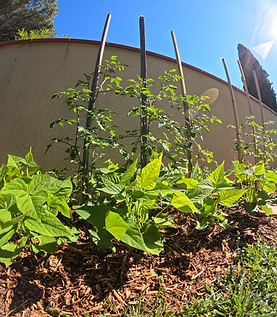
📢 We're looking for an undergrand student to explore the effect of intercropping 🍅 🫛 on the soil microbiota🦠 !
Scientific background
Understanding how soil microbial communities contribute to the benefits of intercropping is currently one of the major challenges in agroecology. Intercropping can improve productivity, reduce pressure from certain pests and pathogens, and enhance numerous ecosystem services. While interactions between plants and the soil microbiome are among the mechanisms that may explain the benefits observed in intercropping systems, the effects of intercropping on the composition and functions of the rhizosphere microbiome remain largely unknown.
This internship is part of the participatory research project CoCultures, which brings together scientists, gardeners, and market gardeners to co-design and evaluate vegetable intercropping systems. Beyond evaluating their agronomic performance, the project aims to understand the changes induced by plant diversification on soil properties and the associated microbial communities. Several intercropping systems have been tested, and rhizosphere soil samples collected provide a unique resource for studying the impact of plant diversification on microbial communities.
Internship objectives
The main objective will be to determine how intercropping modifies the composition and functions of the rhizosphere microbiome associated with each cultivated species, in comparison with sole crops. The intern will also seek to identify common microbial signatures across different intercropping systems in order to highlight potential general mechanisms associated with plant diversification. Particular attention will be paid to the functions potentially associated with the observed changes, based on the identification of microbial taxa and targeted qPCR analyses.
The intern will participate in the entire analytical workflow, from molecular biology procedures to bioinformatic data processing, statistical analyses using R, and biological interpretation of the results. The results will contribute to the identification of the microbial mechanisms that may explain the agronomic benefits of intercropping.
Candidate profile
Master student or final-year engineering student specializing in microbiology, biology, agronomy, ecology, bioinformatics, or a related field.
👉 Basic knowledge of molecular biology and interest in plant–microorganism interactions and agroecology
👉 Proficiency in statistical analyses and data visualization (knowledge of R is appreciated)
👉 Scientific curiosity, autonomy, rigor and ability to work as part of a team▶️ Internship for 6 months, starting in January 2027
💡 If this sounds interesting to you, please send your CV and a motivation letter before 30/09 to Paloma Duran & Mathieu Hanemian (Ecogen team)